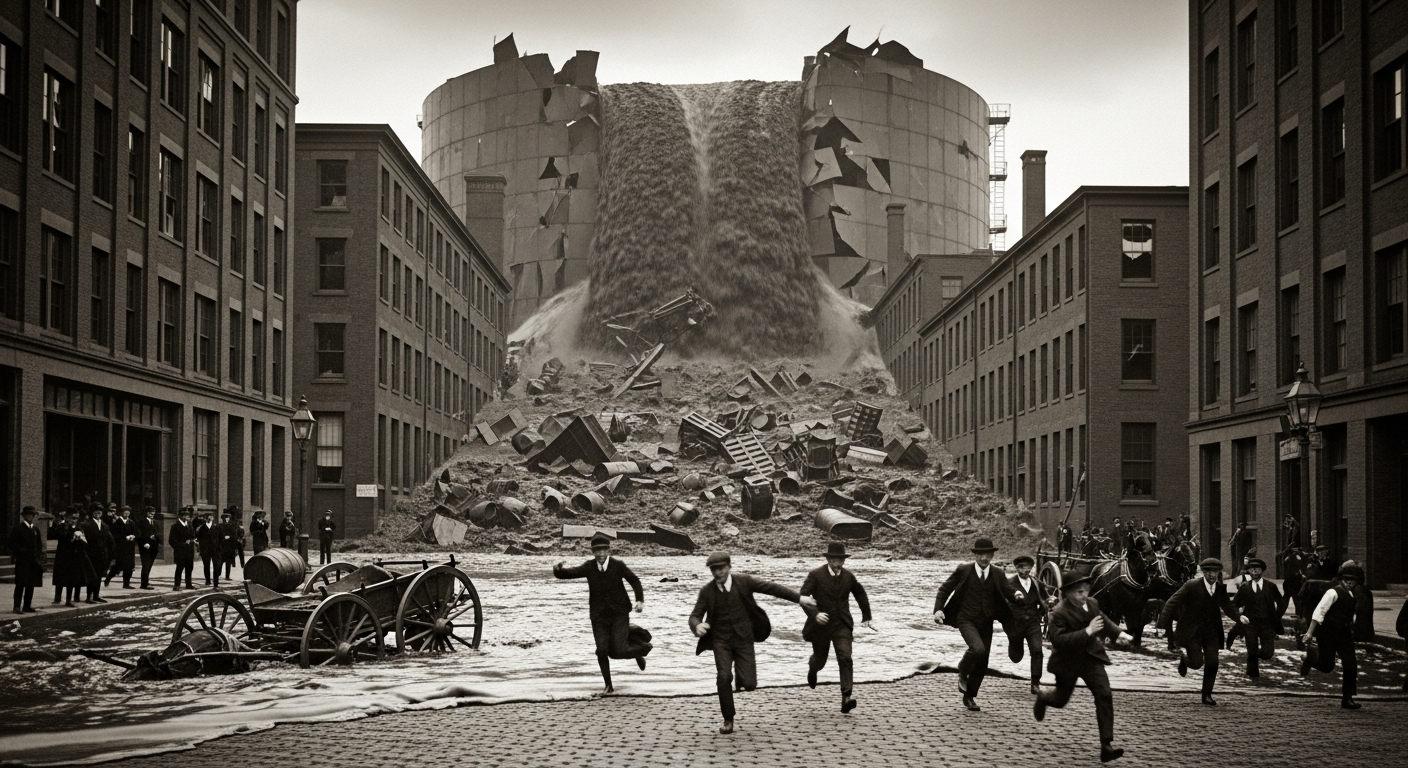
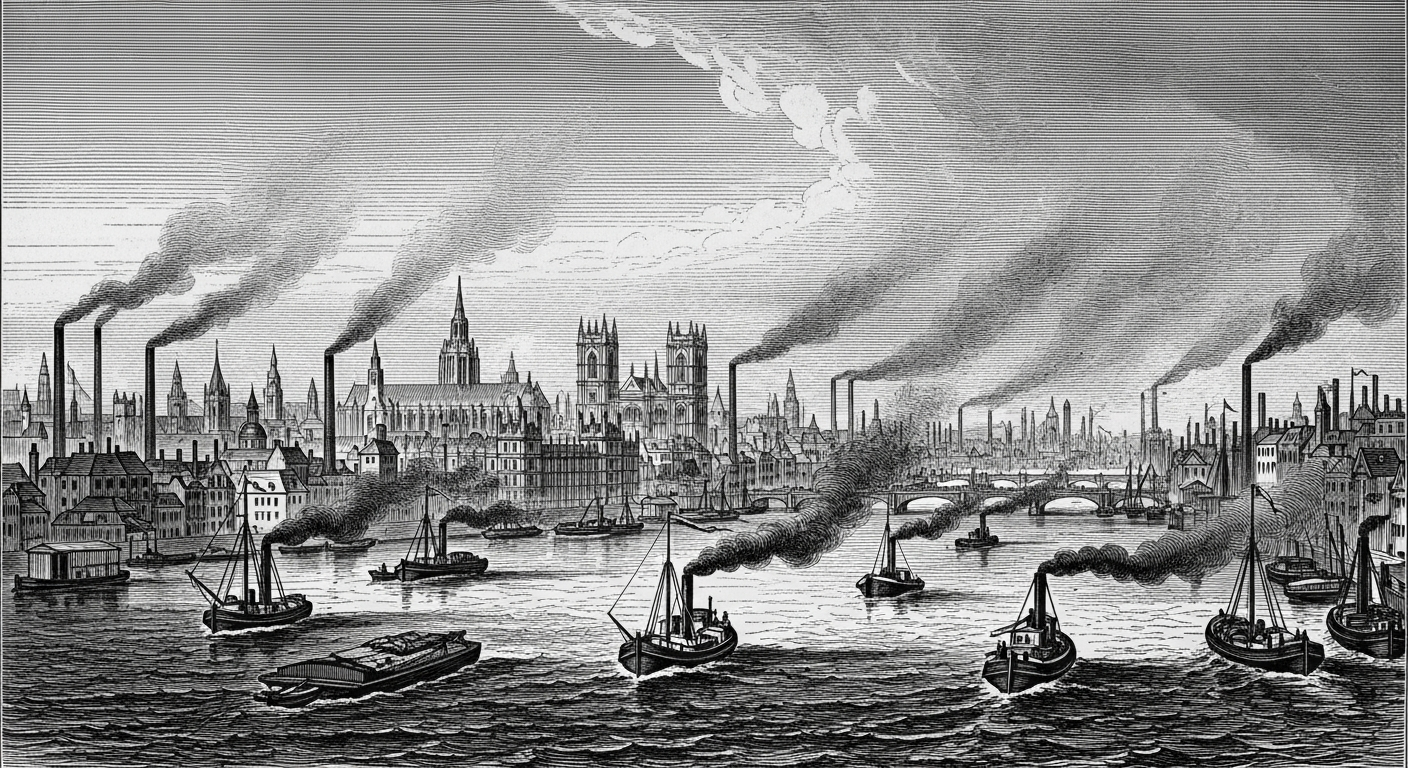
The evening of October 17, 1814, started like any other in the St. Giles district of London. The Meux and Company Brewery was conducting usual operations, with massive vats of porter beer fermenting in wooden casks towering up to 22 feet high. Then, at approximately 5:30 PM, disaster struck in the most unusual way imaginable. A wave of beer, 15 feet high in places, crashed through the brewery walls and surged into one of London’s poorest neighborhoods, killing eight people and devastating dozens of homes.
The London Beer Flood remains one of the strangest industrial disasters in history — a catastrophe that combined the dangers of large-scale brewing with the vulnerability of London’s urban poor.
The Brewery
The Meux and Company Brewery was one of the largest in London, occupying a sprawling complex on Tottenham Court Road at the edge of the St. Giles slum. The brewery specialized in porter, a dark, heavy beer that was enormously popular in Georgian England. Porter was brewed in massive quantities and stored in enormous wooden vats for months to mature.
The brewery’s vats were engineering marvels of their time — and objects of considerable civic pride. The largest vats could hold over 100,000 gallons of beer and stood over 20 feet tall. They were constructed from thick wooden staves bound with iron hoops, similar in design to the barrels used to store wine and spirits, but on a vastly larger scale.
Competition between London breweries to build the biggest vats had become something of an arms race. In 1795, a brewery in nearby Brick Lane had built a vat capable of holding 20,000 barrels — so large that 200 guests sat down to dinner inside it before it was filled. The Meux Brewery was determined to match or exceed such feats, and by 1814, their largest vats were among the biggest vessels ever built for liquid storage.
These vats were, however, under considerable stress. The fermentation of porter produces carbon dioxide gas, which creates internal pressure. The wooden staves, exposed to constant moisture and pressure, were subject to rot, warping, and gradual weakening. Iron hoops corroded over time. Maintenance was expensive and sometimes neglected.
The Rupture
On the afternoon of October 17, 1814, one of the iron hoops on a massive fermentation vat gave way. A clerk named George Crick noticed the broken hoop and reported it to his superiors, but he was told that such failures were common and that the vat was in no immediate danger. The brewery continued operations as normal.
Approximately an hour later, at around 5:30 PM, the weakened vat catastrophically failed. The sudden release of pressure and the cascading force of 135,000 imperial gallons of beer triggered a chain reaction. The surge of liquid from the first vat slammed into neighboring vats, causing several more to rupture in rapid succession. Within minutes, eight vats had failed, and approximately 388,000 gallons — roughly 1.47 million liters — of beer were loose.
The force of the combined release was tremendous. The beer burst through the brewery walls, flooding into the streets with enough power to demolish the wall of an adjacent house and cause structural damage to several others.
The Wave
The beer, released with explosive force, formed a wave estimated to be 15 feet high in some places. This wall of liquid surged into the streets of St. Giles, one of London’s most notorious slum neighborhoods. The area was densely packed with tenement houses, many of them in poor structural condition. Families crowded into single rooms, and the poorest residents lived in basements — the cheapest and most dangerous accommodation.
The narrow streets and alleys of St. Giles channeled the flood, concentrating its force. The wave crashed into buildings, buckled walls, and poured through doors and windows. Basements filled in seconds, trapping anyone inside. The force was sufficient to knock people off their feet, sweep away furniture, and collapse weakened walls.
The Victims
Eight people lost their lives in the flood. The victims were overwhelmingly the poorest residents of the neighborhood — people living in the basements and ground-floor rooms that bore the brunt of the wave.
Eleanor Cooper and her daughter Hannah, aged 3, were having tea in their basement home when the wave struck. The beer flooded through the walls so quickly that they had no chance to escape. Both drowned. Their neighbors, who lived on upper floors, survived but lost all their possessions to the flood.
At a house on Great Russell Street, an Irish family was holding a wake for a young boy who had died the previous day. The mourners were gathered in a ground-floor room when the beer wave crashed through the walls. The coffin was overturned and the body swept away. Several mourners were injured, and two — Mary Mulvey and her son — were killed.
Ann Saville, a 63-year-old woman, was killed when the wall of her home collapsed under the force of the flooding beer. Catherine Butler, a domestic servant, drowned in a basement kitchen where she was working. Thomas Murrell, a 27-year-old man, died after being trapped under debris caused by the flood.
The Rescue
Rescue efforts began immediately but were hampered by the chaotic conditions. The streets were flooded with beer to depths of several feet in places. Buildings were damaged and unstable. Residents who had survived the initial flood waded through the beer to help their neighbors, pulling people from flooded basements and searching collapsed buildings.
The situation was complicated by the fact that some residents, in a district where poverty was endemic and alcohol was expensive, attempted to collect the free beer rather than flee. Reports describe people scooping beer from the streets with pots, pans, and any available container. Some residents allegedly drank so much of the flood beer that they became ill, though no deaths were attributed to alcohol consumption.
The brewery itself suffered massive property damage. The ruptured vats represented an enormous financial loss — both the brewing equipment and the beer itself were valuable. Structural damage to the brewery buildings required expensive repairs.
The Inquest and Legal Aftermath
A coroner’s inquest was convened to investigate the deaths. The proceedings attracted significant public attention and raised uncomfortable questions about the safety of large-scale brewing operations and the vulnerability of the poor neighborhoods that surrounded them.
The jury ultimately returned a verdict of “casualty” — the Georgian-era equivalent of “accidental death” or “Act of God.” This meant that no one was held legally responsible for the disaster. The brewery owners were not charged with negligence, and no fines were imposed.
The brewery faced severe financial losses from the disaster — not only the cost of the lost beer and the physical damage to the facility but also the excise duties that had already been paid on the beer that was now flowing through the streets of St. Giles. In an extraordinary move, the brewery successfully petitioned Parliament for a refund of the excise duties, arguing that they should not have to pay taxes on beer that they could not sell.
The victims’ families received no compensation. Many had lost not only loved ones but also their homes and all their possessions. In an era before insurance, welfare systems, or disaster relief, the poorest residents of St. Giles were left to rebuild their lives with no assistance.
Changes in Brewing
The disaster prompted changes in brewery safety practices, though reform was gradual rather than immediate. The incident highlighted the dangers of storing enormous quantities of liquid in wooden vats, particularly when those vats were aging, poorly maintained, or subjected to the internal pressures of fermentation.
Over the following decades, London breweries gradually transitioned from massive wooden vats to smaller, more manageable storage vessels. Eventually, wooden vats were replaced entirely by lined concrete cisterns and, later, steel tanks — materials that were stronger, more durable, and easier to inspect for structural weaknesses.
The beer flood also contributed to a broader awareness of industrial safety in an era when factories, mines, and workshops operated with minimal regulation. While it would take many more disasters — and many more deaths — before comprehensive workplace safety laws were enacted, the London Beer Flood was one of the early incidents that highlighted the need for industrial regulation.
Historical Memory
The London Beer Flood has become one of the city’s most unusual historical incidents. It is remembered with a mixture of horror at the lives lost and dark humor at the bizarre nature of the disaster. The story has been featured in books, documentaries, and television programs, and it appears regularly in lists of history’s strangest events.
Today, few visitors to London’s West End realize they are walking over ground where the strangest flood in city history occurred. The Meux Brewery site is now occupied by the Dominion Theatre on Tottenham Court Road. No plaque marks the spot, and the neighborhood bears no trace of the catastrophe.
The London Beer Flood stands as a reminder that industrial safety was an afterthought in the early nineteenth century, and that the poor bore the brunt of commercial disasters. The victims of the flood — people living in basements because they could afford nothing better — died because they happened to live next to a brewery that stored enormous quantities of liquid in aging wooden containers. Their deaths were ruled an act of God. A more honest verdict might have been an act of negligence.